Showing posts with label food. Show all posts

May 22, 2008

Salmon, Rice, and Peas--and Swiss Chard too


On weekend evenings when I was a child my family often had no-bother meals. One favorite was salmon, rice, and peas all mixed up together. The other was bagels and lox, which we had most Saturday nights. Bagels and lox are of course an ethnic tradition, but salmon, rice and peas seemed to be particular to my family.

The salmon and the peas were canned and the rice was Minute Rice. I can't say I loved the dish then, not like bagels and lox. But it was comfort food.

Over the years, every month or so I have had a yen for salmon rice and peas. I still use canned salmon but I’ve upgraded to frozen peas and longer cooking rice. At first I missed the special sweet, processed taste as well as squishy texture of the canned peas. But it's actually better with frozen peas.

Other than the above changes, I have been pretty faithful to the original recipe. This is not to say it always taste the same. To the contrary it’s not just one dish but a whole family of dishes---at least to my salmon-rice-and-peas-attuned palate. By adjusting the proportion, the salmon can dominate, the peas can dominate, or anything in between. Each of these endless variations can have tends to have subtly different overtones and undertones.

I just throw it together with minimum thought. However I cannot exclude the possibility that my unconscious mind is tailoring the mix to the needs of my palate (or my psyche) for the evening. Intuition can direct our actions whether or not we listen for that inner voice. Of course the best cooking comes about when we listen (see
Intuition and Brussels Sprouts---what!?).

After a long abstinence, a few weeks ago it was a salmon rice and peas night. I had an idea for an alteration I just couldn't get out of my mind. My latest culinary enthusiasm is chard. I had a few leaves of chard in the refrigerator (with only one or two good days to go). Breaking all my year of salmon, rice, and peas near-purism, I considered cooking them up and throwing them in.

This was not something to be undertaken lightly. It seemed a sacrilege as well as a boundary crossing sure to have consequences other than the simple success or failure of the dish. Moreover why was I thinking of changing a trio that already played endlessly interestingly together into a quartet? Eventually I recognize that in spite of my careful conscious weighting of the pros and cons, the project was going forward. I started cooking the chard.

I usually do not add the juice from the salmon to the concoction. But chard has a strong taste. To balance it I decided I needed to add the juice as well as the whole can of salmon.

The first bite left me astounded. It was delicious; the flavors were bright and exceptionally well-balanced. But even more than that, it evoked my mother's palate—everything that was good about her cooking—perhaps more than anything I have tasted since her death.

I certainly crossed a boundary. But instead of moving further away from tradition it brought me closer to its core. Looking back, I guess I was never so crazy about salmon rice and peas, because it didn't have the brightness of my mother's weekday food (especially with those can canned peas).

-----------

My mother wasn't a particularly skilled cook, but her food was tasty and she relished eating. She ate slowly and luxuriated in it perhaps more than anyone else I have ever known. All this was permission-giving to me. Learning to cook from Julia Child's Mastering the Art of French Cooking was a prelude to my scientific career.
(see Food and the Spirit: Rededicating My Thesis 27 Years Later)

My mother also became interested in the kind of cooking championed by Julia. She however had a severe handicap. She just could not grasp what it meant to sauté something. She was fascinated by the concept and often asked me to explain it to her. She would seem to get it, but a number of months later she would ask me again. She was an intelligent woman, and I was incredulous at her apparent idiocy about the concept of sautéing.

After my experience re-creating the essence of my mother's food, I decided to look up sauté in the dictionary. It says:


To lightly fry in fat in a shallow, open pan—n. [French, "tossed (in a pan)," from the past participle of sauter, to leap, from Old French, from Latin saltara, frequentative of salare (past participle), to leap....]


Food leaping from the pan is a lovely image for sautéing. But I began to see that it is also somewhat problematic of a concept. Leaping is a relative thing—or rather the time of cooking before leaping. I'm not sure we really want sautéed chicken breasts to leap from the pan until the chicken is cooked. We don't want sautéed mushrooms to leap from the pan until they give back their juices.

These legalities—although I can't say exactly how—helped give me some insight into my mother's problem with the concept of sautéing. She sautéed all the time. She just couldn't figure out how it was different from pan frying or browning. She already had categories and she couldn't fit a new one in, especially one that is, like the others, not so well defined.

At some level I suspect her question was less about sautéing than it was about the essence of French cooking. This new technique she thought she could learn—if she could figure out what it meant— just might help situate her in this celebrated cuisine. And indeed Julia does mention a large number of tips in Mastering Vol I, such as high temperature and drying food with a paper towel (Ug, See
Intuition and Brussels Sprouts---what!!?). But it wasn’t really a new technique, rather just another name for what my mother on occasion already did.

In contrast I first learned to cook in the context of French cooking. I didn’t pan fry food but did that thing called sauté from the start. Also thanks to Julia, I had much of the context that went with it. I would not be surprised if other women of my mother's age felt the same way about sautéing, but were ashamed to admit it and kept their perplexity to themselves.


----------

My mother's difficulty was that a new word was used for a deeply familiar technique. Something similar can occur when familiar words are used in a new context. This happened to me around my first computer, a Mac. I was profoundly intimidated by frequent reference to “a finder” and to “a chooser.” I felt the same way when somewhat later a computer-savvy colleague said of a computer, “This machine has no security. I have to put some on.” I was dumbfounded. It was clearly important, but security meant men in uniforms. How could you put men in uniforms on a computer?

These words were chosen because they were considered intuitive in the sense of user-friendly. But I didn't know enough about computers (or computers with high-level languages) initially and then the internet to have a context for them. Because they were familiar words used in mysterious contexts, they seemed doubly impenetrable to me--- uncrossable barriers between those who were in the know and those who were not.

Our categories—the way we break the world up into kinds—are essential to our ability to construct meaning and hold onto it. After awhile it becomes hard to rename them, give them new context, or add another ingredient. To be sure “it is hard to teach an old dog new tricks.” But perhaps there is a more subtle lesson to be gleaned as well.

The categories that help one person or group make sense of the world can be different or have different contexts from those of another person or group. Sometimes it takes an act of intuition—along with some compassion for the way we all tend to hold on to familiar meanings—to translate in between. Good things tend to happen when we make the leap!

-------------
Coincidentally, it turns out that the word Salmon is from the same root as sauté. The Latin name for Salmon is Salmo, hence the jumping or leaping fish!


I'd love to hear about your favorite comfort food---with or without embellishment.

June 05, 2007

FOOD AND THE SPIRIT (or Re-Dedicating my Dissertation Twenty Seven Years Later)


I have a rare chance to make up for a lost opportunity. I had wanted to dedicate my PhD thesis to Julia Child. The topic had nothing to do with cooking, at least in the way the word cooking is generally used. I was studying how digestive enzymes, which are large proteins that break down the food we eat, get from the pancreas where they are made into the gut.


Instead when push came to shove I decided to dedicate it to my younger brother. He had died my junior year in college of cystic fibrosis, just shy of the age of thirteen. Cystic fibrosis is a disease in which digestive enzyme secretion is impaired and children cannot breakdown the food they eat. That's him below at my older brother's wedding---capturing the action. Had Bruce lived, he---not I---would have been the scientist in the family. Not least because my dissertation happened to be on digestive enzyme secretion, it seemed right to dedicate it to Bruce. I am glad I did.


I was drawn to the idea of dedicating my dissertation to Julia because learning to cook from her exceptional cookbook gave me the courage I needed to go into science. An intuitive type, I had always been a bit spacey. I had assiduously avoided serious science, and especially laboratory science, feeling it alien to the likes of me. Learning to cook in the years just after college under Julia’s tutelage gave me confidence in my ability to weigh and measure. She did much more; she helped ground me in the world of sensation and also introduced me to the pursuit of excellence.


Though nominally I was teaching, my real job---and joy---was cooking. In the beginning my love affair with Julia and fine food took place in a tiny closet of a kitchen with no counter space what-so-ever and only a 2 x 2.5 foot table. Nonetheless I followed almost every step of her recipes as if they were sacred texts that held the secret to life. In some sense to me that's just what they were--- and I suspect I was not the only one. Julia opened this country up to the joys of the palate and much more.


I wonder did Julia serve as a stepping stone into science for anyone else---or am I the only one? As a youngster I knew science was supposed to be about observing the natural world, but little I saw jibed with what scientists supposedly said--- like apples and feathers falling at the same rate. At another level the control and precision that experiments required was not associated with women for me. Women didn't control the environment, men did. I don't think a male Julia Child, clarity, nonchalance, breathiness and all, would have had the same influence on me. Because Julia was a woman, she gave me permission; once I had begun to master French Cooking, the possibility of mastering other things became real to me as well.


My skill with cooking eventually went beyond just following Julia’s instructions. As I mentioned in my last post "Intuition and Brussels Sprouts," sometimes when I put myself in a special non–thinking but completely attentive state while adjusting the seasoning of the dish, I would know just when it was enough. Cooking tends to involve great deal of implicit learning, unconscious information processing, and expertise. However the connection between cooking and intuition is even deeper.


Years ago, when a friend and I were traveling together throughout Western US and Canada, she taught me to choose restaurants by their signs. It turned out to be a pretty good rule of thumb--- a restaurant with an appealing sign generally had correspondingly good food. Over the years, I have thought a lot about what this special something is that goes beyond good design.

Sometimes even a very simple restaurant sign or simple cooking rises to the level of art. Like all art, it depends on a combination of knowledge, skill, and creativity that ‘cook’ together below awareness---in short on intuition. Yet I feel that artistic quality is neither necessary nor sufficient to explain a sign that draws you into a restaurant or the good food that so often goes with it. Sometimes a sign that bespeaks good food to me can by no stretch of the imagination be called art.


I suspect some even more basic intuitive alchemy connects the sign an owner of a restaurant chooses to hang to invite people in and the food they prepare. Both share an inherent movement or dynamism that appeals and sometimes even fascinates. We feel enriched by looking at them or tasting them—and perhaps especially when the dynamism is ‘oh so subtle.’ (It might come from a just barely perceptible rhythm to the lettering or composition.) The sign forms an appealing as well as self-sustaining, or continuing, pattern in space--- and the food an appealing and self-sustaining pattern of tastes. These patterns resonate with something etched in the human spirit. To the extent we linger with them, they connect us more deeply to ourselves and also at the same time connect us to something larger than ourselves.


On Julia's website at the Smithsonian below a picture of her in the kitchen in France where she first started to cook is a quote from her “The whole thing was an opening up of the soul and spirit for me." Food is the most direct way we take in the external world and make it part of ourselves. Much of the time we eat without awareness. We are just following our biological imperative to survive. But when we do it with consciousness, this transmutation of world into self can also become a bridge between the sensual and spiritual. To begin with, as the tradition of saying grace highlights, we appreciate the bounty of the earth.


When the food is really delicious---to the extent we savor it--- we are also led into different and more rarefied realms of appreciation and even joy. The cook who pats herself on the back for making a wonderful new dish, in addition to appreciating her own skills, is celebrating---even when she doesn't know it---the slightly enlarged world of nuanced experience her own intuition has opened for herself and guests. (Of course, this opening might instead depend on the intuition of others codified in a recipe, combined with her skill.) When she makes and serves an old favorite, she revisits that special place again.


If you want to get heightened sense of the way food can carry one beyond oneself to new places, you might try a radical experiment---eating a wonderful meal in the company of friends in complete silence. It is hardly anti-social! Rather to the extent one remains present, it leads to an intensified experience of both food and friends. “It is the nectar.” as a friend who I convinced to lunch in silence on the veranda of a lovely restaurant in Italy during a busy conference said. Alas, Julia opened the possibility of experiencing this nectar for so many of us.


Had I dedicated my thesis to Julia back then, my appreciation of her influence on my life would have been incomplete. I was still years away from my current interest in exploring and resonating the experience and science of intuition. But what is a mere twenty seven years when completeness is at stake? Here is the original dedication, and below what I would now add:


This dissertation is dedicated to Bruce Isenman. He wanted to be a scientist, and I believe nothing would have stopped him had he lived.

This study is also dedicated to Julia Child. By teaching me to weigh and measure with the best of them, she gave me the confidence I needed to become a scientist. I now know that she also helped chart my course beyond to resonate more subtle yet no less real realms of knowledge and experience with scientific understanding.


************************************
************************************


OTHER RESTAURANT SIGNS I THINK INTERESTING
(A Work In Progress)

I have not eaten at all these restaurants whose signs I think bespeak good food or find interesting for one reason or another. It is no doubt a better test of the rule when the food is unknown. (I apologize for the quality of some of the pictures. I am using Picasa for the first time, and the quality of the uploads seem inconsistent. Any insight appreciated.)


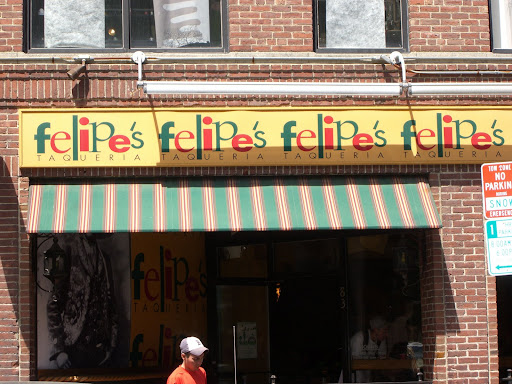
I am not sure about what these signs reveal, but I am certainly intrigued by them. The restaurant has been there since my college years and back then had excellent subs. It recently closed.


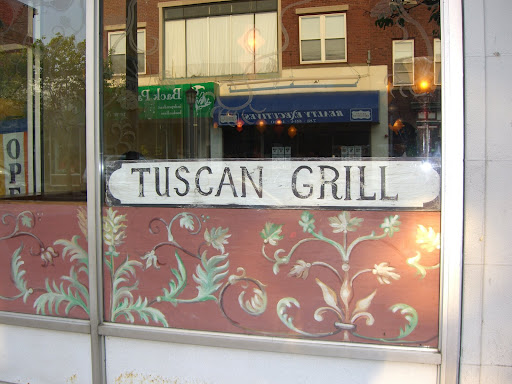
This one has changed hands at least once and probably more---so it might be a legacy issue as well.

The signs in the foodcourt of the Porter Exchange in the old Sears Building in Cambridge seem to be all by the same artist. They are very attractive but to my mind verging on slick. I think signs by an artist hired by a corporation for a foodcourt are less telling. Most of the food is quite good at the Porter Exchange, if I remember correctly, and hardly slick!


May 01, 2007

INTUITION AND BRUSSELS SPROUTS---WHAT!!?

My first intensive schooling in intuition came when I learned to cross streets, my second when I learned to drive a car, and my third when I learned to cook (see "Running in Herds, Traffic, and Intuition").The cooking part began a year or two after I graduated from college with a going away dinner for some friends who were leaving Cambridge---and a three day stew. I bought Julia Child’s first cookbook, what became the first volume of Mastering the Art of French Cooking, and chose the most labor intensive dish I could find.

Julia became my cooking teacher. Her clear and wonderful, if labor intensive, recipes produced food I was delighted to serve and eat. Because she provided such a strong base, she created what I will call a feeling for the palate--- or alternatively, for the recipe.

Her last direction was frequently to correct seasoning. Often it seemed that if I held the salt (or spice) shaker over the dish and went into a mentally blank but extremely attentive place, I would know exactly how much to put in. It certainly doesn’t happen all the time, but when it does, I have this clear crisp feeling of being on beam—almost as if I am communing with the dish.

Over the years I have consulted Julia less and less. A recent special project made me go back to her once again. I ate a wonderful pasta dish in a restaurant several years ago, which, among other things, contained a few brussels sprouts. Cut in two, they had been browned in such a way that they became all crispy on their cut end. The contrast of textures and tastes was divine.

Eventually, I decided I wanted to try to make them for myself. I have cooked brussels sprouts only very occasionally---boiling them the ten minutes that the recipe I used suggested---in a pan just large enough to accommodate them. The results were OK, but less than wonderful; the sprouts tended to end up a dull green.

The key, Julia said, was a huge pot of boiling water, a short cooking time---about 6 minutes---and taking them out at their greenest. When I tried it, they turned bright green in no time at all---maybe two minutes. I hesitated a moment and then took them out.

I went on to the second step—cutting them in half and trying to brown them in butter. They hardly browned at all. However my curiosity was piqued. I thought intuition might tell me how brown the butter had to be---instead of my conditioned reactions of all kinds, combined with my thinking mind. Over a period of months I cooked many batches of brussels sprouts—each time trying a different way to brown them. Indeed intuition did have the role in this project, and somewhat like I anticipated, but I got in which part wrong.

I began to notice something interesting about the initially cooking step---the sprouts stayed bright green for a while---maybe as long as a minute and a half. Nonetheless something in me knew when they were at their brightest green and would be at their most delicious. This means a tiny bit crunchy inside, with a wonderful mustard or perhaps horseradish-like flavor.

I would watch them attentively and all of a sudden I would just know it was time to take them out. It certainly had nothing to do with thinking. In fact when I let myself think, I was less alert to this other kind of knowing and less likely to respond appropriately.

When I was a postdoc---way before I began to study intuition---I had my first experience of “knowing more than I know.” Often before I went home for the evening, I would have to add a liquid sample to a thick slurry of beads in a column and wait until it very slowly flowed in. Often it would get stuck.

One evening I knew that the sample was flowing even though I realized that the change in the fluid level in the column above the slurry of beads was imperceptible to my conscious mind. Astounded, I checked several more times and came to the same conclusion. This knowing had an extremely grounded, even physical feeling to it, though I could not identify its source.


I sensed it was not extraordinary knowing, but something every bit as interesting. Apparently our ability to detect visual change below awareness is greater than our ability to detect visual change at a conscious level. Since then I have become familiar with an ever growing body of work that confirms that indeed the unconscious can register and integrate stimuli that do not make it to awareness---see, for example, this 2000 review article by Philip Merikle . The study of unconscious perception of all kinds is a hot area of investigation in cognitive science.

I suspect there is also a similar explanation for my ability to sense when the brussels sprouts will be at their most flavorful as well. Probably my unconscious is aware of gradations in bright green that my conscious mind cannot distinguish. It may also follow the rate of change of the color to capture when it is at its brightest.

Perhaps there is a similar type of physiological explanation for my sometimes ability to stand over the pot in an apparently blank but attentive way and know just how much salt to put in---and also to get a clear signal that it is so. Could the vapors above the pot contain essential clues?

Of course I cannot rule out that an even more obscure aspect of the human ability to know has a role in this situation---or indeed any of these situations. But at least with the first two, a reasonable sounding explanation based on the greater acuity of our unconscious perceptual abilities makes it unnecessary to go any further, at this point anyway.

Currently I am still working on the second step---browning the brussels sprouts. After trying everything I could think of---different degrees of brownness of the butter, different pans, oil instead of butter, dipping the ends in different flour mixtures---I realized that it was time to bite the bullet. I had to attempt to dry the brussels sprouts after the initial cooking---an absurd-sounding notion I had been hoping to avoid. After a lot of thinking, I decided the best I could do was to put the newly cut cooked brussels sprouts on paper towels for a while.


This time they browned beautifully. After sitting a bit, they were scrumptious. The tangy, moist, fresh, mustardy sprouts contrasted in a profound way with the rich, deep, dark, taste of the burnt ends.

But alas they are still not really crispy. I guess I will have to go through everything I already tried before---this time with the paper towel drained sprouts. It is hardly a burden, but a labor of culinary and gustatory love.